Yellowstone Barely Spoke Yesterday
I have spent so much time working on the map lately that I had not been in the field for about a week.
That may not sound like much.
But when you are used to watching the roads, reading the weather, checking the willows, and following the little clues animals leave behind, a week can make you feel disconnected from the whole story.
So my wife and I headed out.
We drove through Grand Teton, entered Yellowstone from the south, worked our way toward Lamar Valley, and completed a large part of the loop.
We covered some of the best wildlife country in both parks.
And Yellowstone barely spoke.
What we expected
We were hoping for bears.
Maybe wolves in Lamar.
A bull moose hiding near water.
Something that would make us pull over, lift the cameras, and feel the whole day suddenly change.
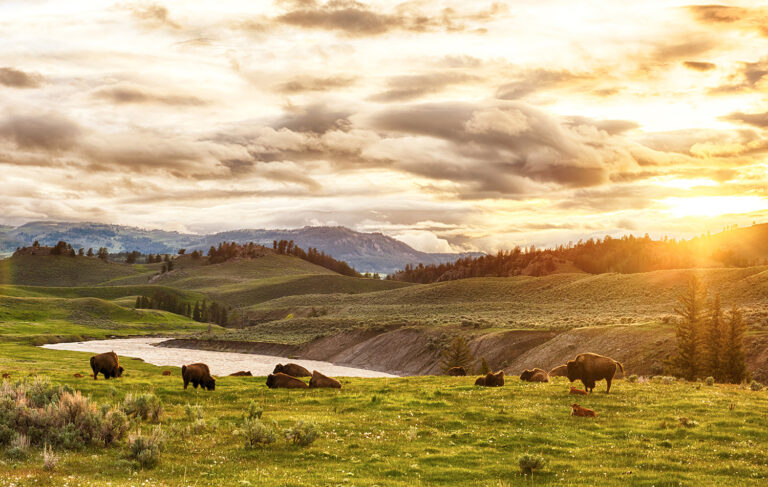
Instead, we saw a few bison near the road in Grand Teton. Later, we found more bison and some elk in Yellowstone.
That was about it.
No great bear moment.
No wolf crossing.
No giant bull stepping out of the trees.
Just a long drive through beautiful country that seemed determined to keep most of its animals hidden.
Late summer can make you work for it
For me, August has often been one of the hardest months for finding wildlife in Yellowstone and Grand Teton.
That does not mean the animals are gone.
It means heat, shade, water, food, and timing become more important.
During the warmer parts of the day, wildlife may hold near rivers, forest edges, thick willows, or higher and cooler ground. An open meadow that felt alive in spring can look completely empty by afternoon.
You can drive the right road at the wrong hour and never know what moved through it earlier.
That is what makes wildlife watching so strange.
You may miss an animal by ten minutes.
You may pass a moose hidden behind three branches.
You may leave a valley just before the evening light pulls everything back into the open.
We may have chosen the wrong clock
We arrived earlier than we usually do.
At first, that sounds like the better decision. Earlier normally means cooler air, quieter roads, and more active wildlife.
But this was a long route.
By arriving earlier and completing the loop sooner, we were already moving toward home when some of the evening activity may have been beginning.
Had we started later, we might have reached certain valleys closer to sunset.
Would we have seen more?
Maybe.
Wildlife never signs a contract.
But the time you reach an area can matter as much as the area itself.
A good wildlife route is not only a line on a map.
It is a line connected to a clock.
A quiet wildlife day should not feel wasted
This is one of the biggest lessons behind the recent map updates.
Sometimes the animals do not cooperate.
You can choose the right habitat, drive the right road, arrive with the right equipment, and still come home without the photograph you wanted.
That does not mean the entire day has to collapse.
Yellowstone and Grand Teton are filled with scenic pullouts, historic places, rivers, mountain views, thermal features, quiet picnic areas, and roads that are worth driving even when the forest keeps its secrets.
That is why scenic locations now appear when they fit the route.
They are not random attractions scattered across the map.
They are places already along the drive that can make the day feel complete while you continue watching for wildlife.
Every good plan needs a backup move
The map also includes backup moves because wildlife plans change.
A road may be busy.
The weather may turn.
You may reach a valley at the wrong time.
The animals may simply decide that today belongs to the trees.
A backup route gives you another direction without forcing you to start the entire day over.
The planner looks at where your day begins, which wildlife matters most, and how much time you have. Then it helps shape a route around those answers.
It also gives you an idea of how long the drive may take, what wildlife to focus on, why the route fits, and what else is already along the way.
That matters because Yellowstone is enormous.
Your time is not.
The map has been keeping me inside
I have not been posting or photographing as much because I have been working hard on the next version of the map.
The planner is easier to use.
The routes are clearer.
Scenic and historic places can appear when they make sense.
Backup moves help when the first plan falls apart.
And I am still improving the way wildlife, timing, and route choices work together.
Every time I take it into the field, I notice something else that can be cleaner.
That is the strange balance of building this.
I have to spend time away from the animals to create something that helps other people find them.
Thank you for helping it grow
To everyone who has purchased the map, joined the newsletter, shared a post, or followed along while I keep rebuilding things, thank you.
You are helping me turn years of wildlife watching and decades of software work into something people can actually use.
Yesterday was not our greatest wildlife day.
But it reminded me why the map needs more than sightings.
It needs timing.
It needs routes.
It needs another move when the first one does not work.
And it needs enough beauty along the way that a quiet day can still become a good one.
If you are wondering where to begin, how long to plan, or what else you can see when the wildlife stays hidden, explore the interactive wildlife map. It can help you choose a route, find places already along the drive, and keep the day moving when Yellowstone changes the plan.
Plan tomorrow tonight.
Keep wildlife wild.