You can buy an old wildlife map anywhere.
A flat map. A folded map. A map with a bear icon printed in one corner and a bison icon printed in another.
That kind of map can tell you the old story.
But it cannot tell you what the park has been doing lately.
That is where I come in.
I am not building this from a desk.
I am building it from the road.
From cold mornings. From long lenses. From valleys before sunrise. From days when I drive for hours and mark nothing because the land is quiet. From days when the whole park seems to open at once.
This is my life.
I go out. I watch. I wait. I photograph. I learn.
Then I bring that fieldwork back to the interactive wildlife map.
I have been here before
There was a time when my wildlife photography was getting international recognition.
I was finding moose most people never saw. I was learning the light, the roads, the willows, the way animals use the same country in different ways.
Then life knocked me down for a while.
Health. Mold. A long break I did not plan on taking.
But the mountains have a way of calling you back when you are ready to become yourself again.
So I came back.
Back to the Tetons. Back to Yellowstone. Back to the roads and valleys where I knew I could rebuild something real.
And this map is part of that return.
This is not a regular map
The Where The Wild Beasts Roam interactive wildlife map is not just a collection of pins.
It is field judgment.
It is knowing when a road is worth your morning and when it is not.
It is knowing when a valley is waking up and when it is just burning your gas.
It is knowing that if half the map looks quiet, there is probably a reason.
Sometimes the best information is not where to go.
Sometimes the best information is where not to waste your best light.
That is what people miss.
This map is not trying to make every area look active just so it feels full.
It is trying to tell the truth of the field.
I follow patterns, not rumors
Most people find wildlife by accident.
They see brake lights. They follow a crowd. They hear somebody say a bear was somewhere yesterday, so they drive that road three times and hope the park repeats itself.
Sometimes that works.
Most of the time, it wastes the day.
I do it differently.
I watch patterns.
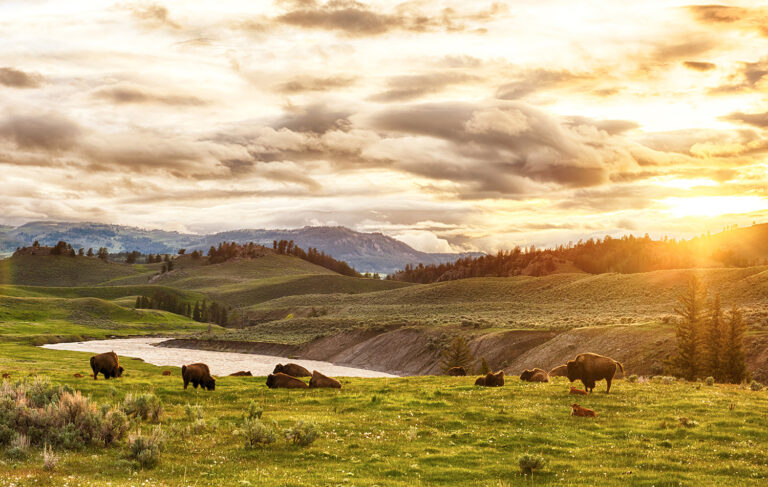
- Where bison herds are moving.
- Where moose are using willows and water.
- Where bears have been active.
- Where elk are holding near edges and open ground.
- Where the roads are worth patience.
That is what you are getting when you follow me.
Not a guess.
Not a rumor.
A field-built way of seeing the parks.
Why this helps photographers
If you are a photographer, the photo starts long before the animal appears.
It starts with choosing the right road.
It starts with knowing where the light will land.
It starts with getting there early enough to be calm.
It starts with enough distance that the animal never has to change its behavior because of you.
The map will not take the photo for you.
It will help you become the kind of person who is ready when the photo appears.
That is the difference.
Why this helps families and wildlife lovers
You do not need a giant lens to use this.
You just need curiosity.
The map helps families turn a drive into an expedition.
It helps kids watch the willows. It helps parents stop guessing. It helps people arrive with a plan instead of chasing whatever rumor is floating through a parking lot.
And when you move with more patience, the park feels different.
More alive.
More generous.
More like the place you hoped it would be.
Why you should follow me
Follow me because I am out there.
Follow me because I care about the animals more than the click.
Follow me because I want people to see Yellowstone and Grand Teton without wrecking what makes them sacred.
Follow me because this is not a side project to me.
This is the work.
The book. The map. The photos. The field notes. The early mornings. The long drives. The mission to help people become better wildlife watchers.
I know what I am doing because I have spent years letting these places teach me.
And now I am building something that can help teach you too.
If you want to plan a calmer day in Yellowstone or Grand Teton, explore the interactive wildlife map. The online map shares recent field observations posted after fieldwork so you can shape tomorrow without chasing rumors, crowds, or brake lights.
Plan tomorrow tonight.
Keep wildlife wild.